
Maintenance & repair of treatment tables
Riedimed Engineering: safety for your therapy tables, your patients and your staff
With Riedimed Engineering, the Riedimed group has operated its own service and maintenance division for therapy tables since 2023. We inspect, maintain and repair electrically and hydraulically driven tables, manufacturer-independent, on site at your practice.
Our services
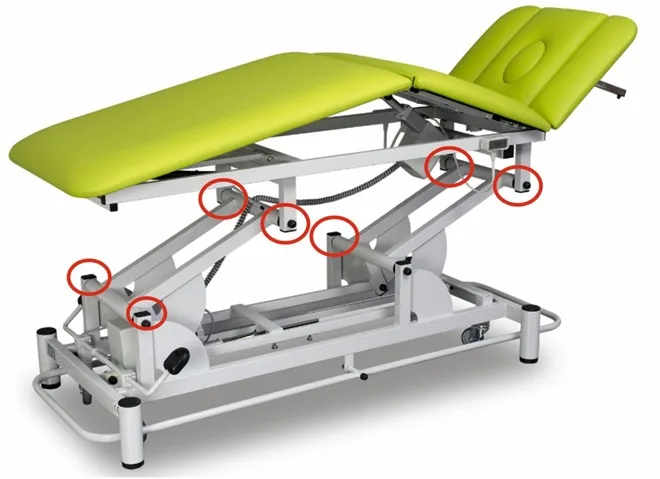
Regular inspection of your therapy tables with particular attention to pinch and crush points. The safety of your patients and your staff is our top priority.
Scheduled maintenance of electrically and hydraulically driven therapy tables, lifting-column and scissor-lift constructions, regardless of manufacturer.
Repair of defective tables with short response times so your practice keeps running.
As the operator of medical devices you must maintain your tables according to the manufacturer's instructions, and if you employ staff, occupational safety testing duties apply as well. We advise you on the German Medical Devices Operator Ordinance (MPBetreibV) and on testing under DGUV Regulation 3, and we document every inspection traceably.
Treatment table broken? Typical faults
These are the problems practices contact us about most often. We identify the cause on site before replacing any parts.
- Height adjustment does not respond or jerks
Common causes are the hand or foot switch, the control unit, cable connections or the drive itself.
- Hydraulic table sinks by itself or leaks oil
Typical causes are leaking seals, a release valve that no longer closes properly or air in the system. Until it is resolved, the table should not be used with patients.
- Unusual noises, play or wobbling
Worn bearings, loose screw connections or worn joints on the lifting mechanism and segments.
- Brakes or castors do not hold
Parking brakes, castors and chassis are part of the inspection and are repaired where needed so the table stands securely.
- Damaged power cable or missing warning labels
Such defects show up during the visual and safety inspection and should be fixed before the table is used further.
Whether a repair is worthwhile is something we discuss with you after the diagnosis.
Typical hazard situations
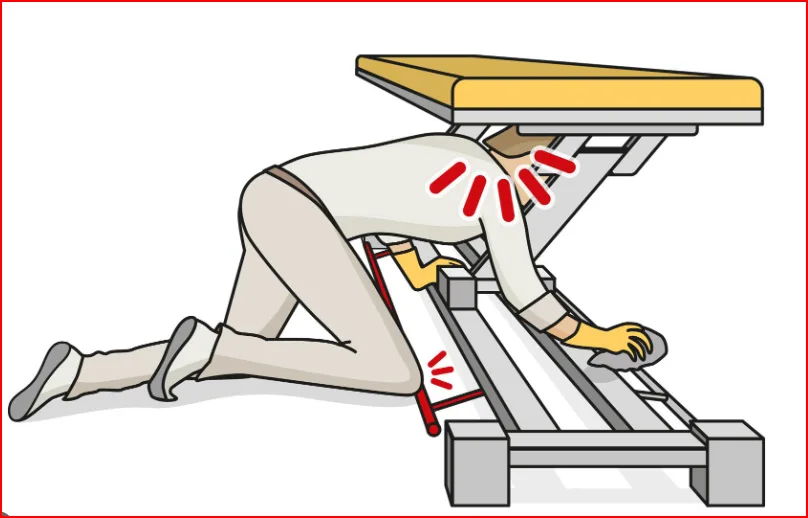
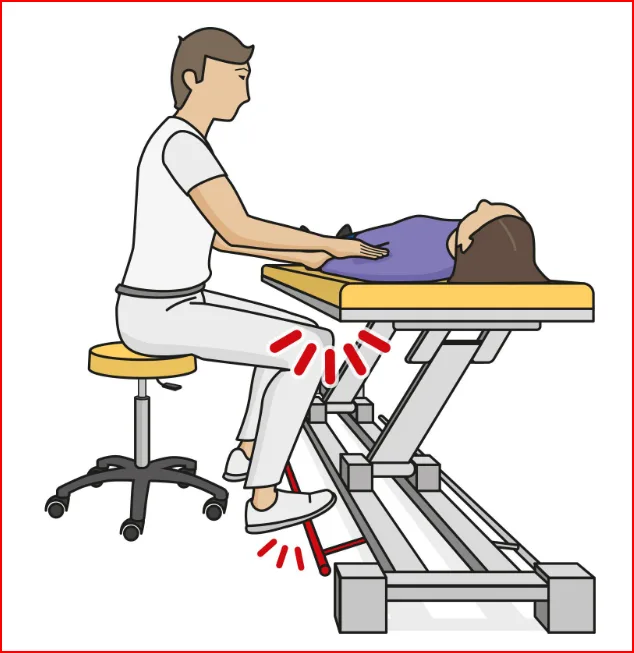
Height-adjustable tables develop considerable force when lowering. It becomes dangerous above all when someone works underneath the lowered table for cleaning or maintenance, or when legs and feet get into the scissor mechanism while treating in a seated position. Regular inspection, intact warning labels and a trained team reduce this risk considerably.
How your service request works
- You tell us the manufacturer, model, year and number of your tables, and for a defect also the fault.
- You receive a non-binding quote.
- We inspect, maintain or repair directly at your practice or clinic.
- You receive an inspection report for your operator records, and every inspected table gets an inspection sticker showing the next due date.
Certified qualification
Our inspections are carried out by trained technicians qualified as safety officers. After the regular safety inspection, every table receives an inspection badge showing the next due date, and we document the results traceably for your operator records.

Who we work for
Physiotherapy practices, medical practices, hospitals and rehabilitation clinics, from a single device to an entire fleet. The more tables we inspect in one appointment, the more attractive it gets for you.
Guide: which inspections treatment tables needTell us the manufacturer, type and year of your tables, we will prepare a non-binding quote.
Frequently asked questions about maintenance and repair
Yes. Riedimed Engineering inspects, maintains and repairs electric and hydraulic treatment tables regardless of manufacturer, with lifting columns as well as scissor mechanisms.
There is no single deadline for every practice. The manufacturer's information in the instructions for use comes first. As an employer, you set the interval for electrical testing based on your risk assessment; an annual cycle is common in practices.
No electrical test is needed because the table works without electricity. However, the mechanics, hydraulics, brakes and castors should be inspected and maintained regularly according to the manufacturer's instructions.
The manufacturer, model and year of your tables, how many there are and the drive (electric or hydraulic). For a defect, a short description of the fault helps, ideally with a photo.
Directly on site at your practice or clinic. The more tables we inspect in one appointment, the more attractive it gets for you.
Please note the recommendation of the German Federal Institute for Drugs and Medical Devices (BfArM) on height-adjustable therapy tables: Read the BfArM recommendation