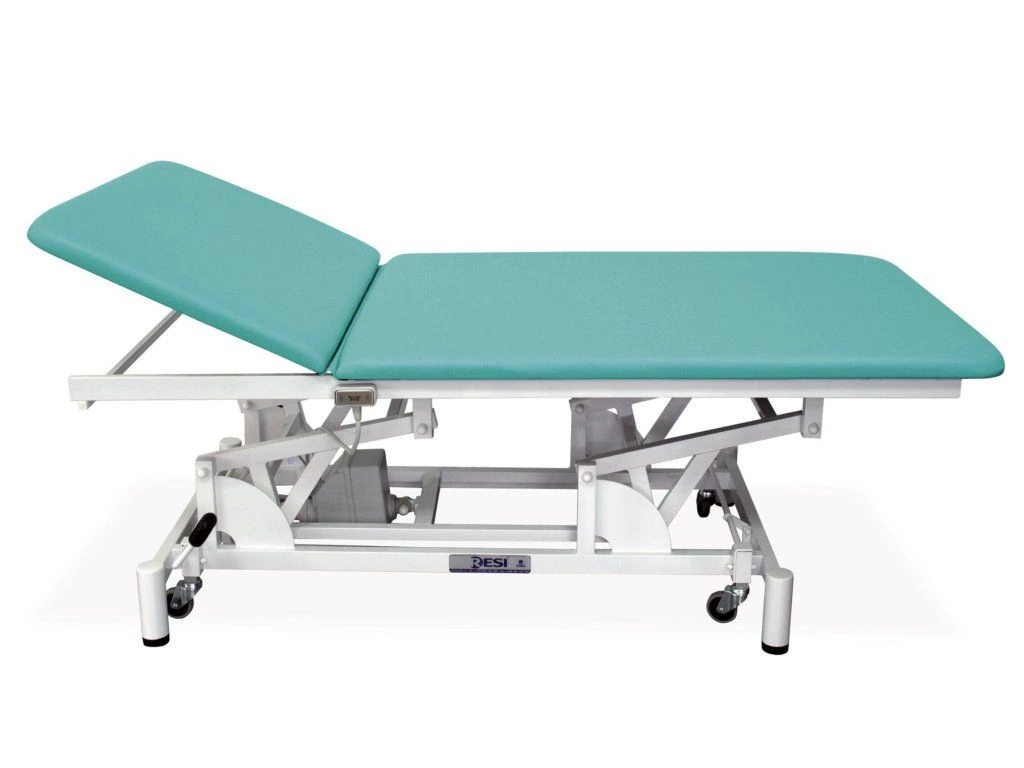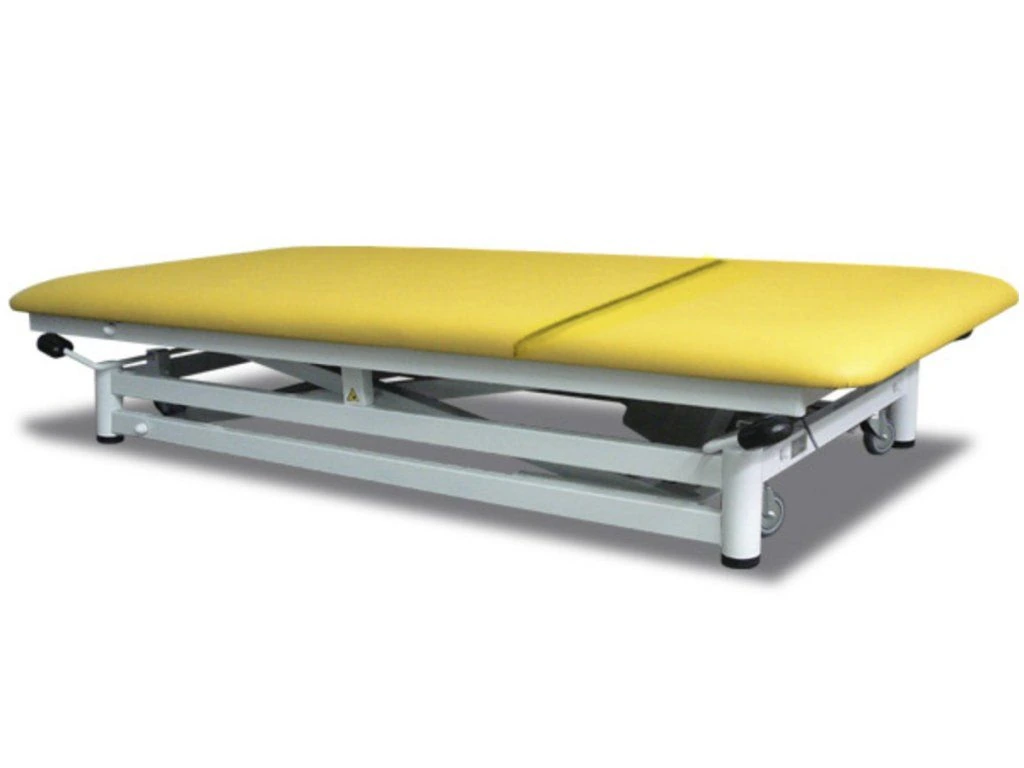
Bobath therapy tables
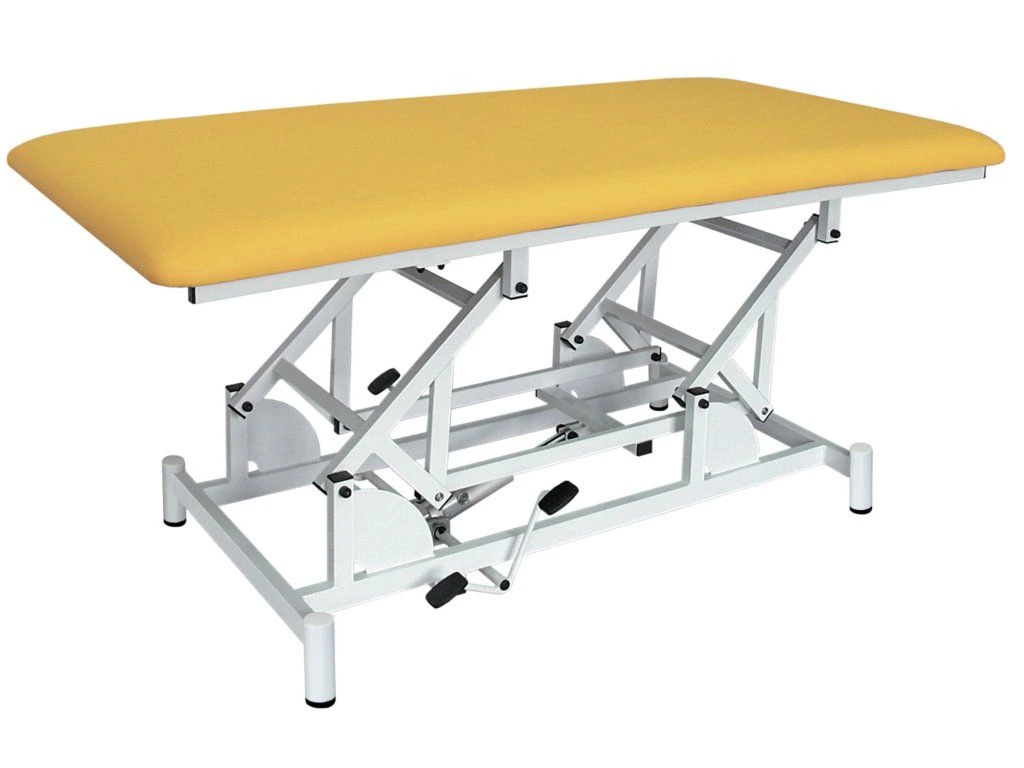
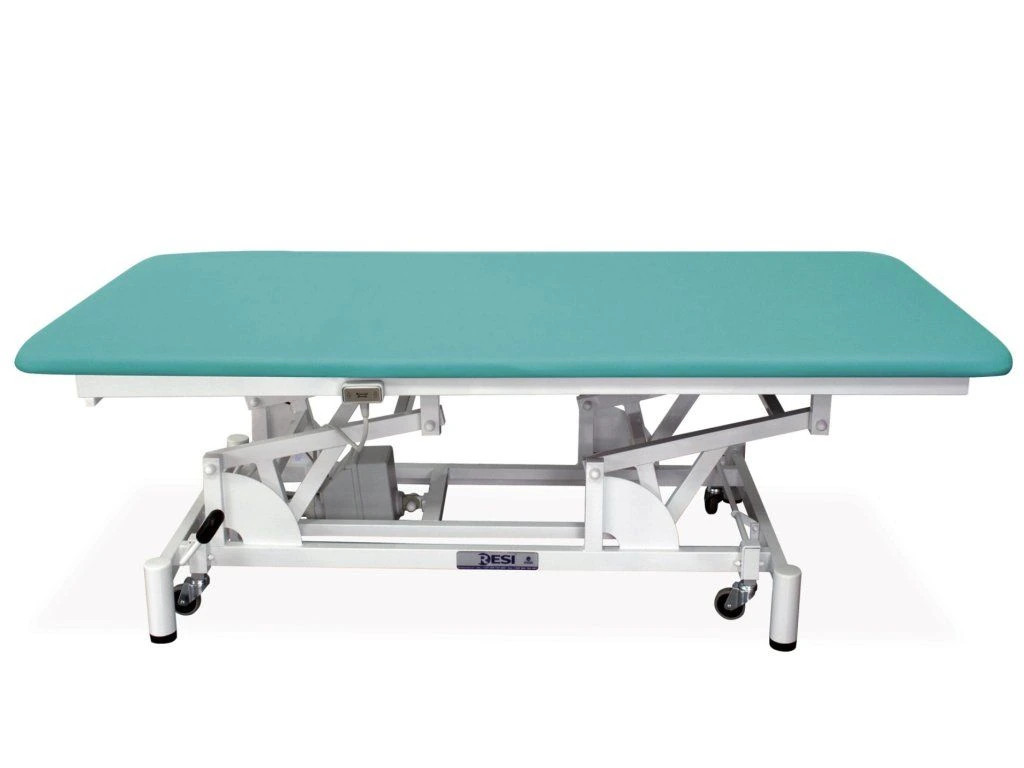
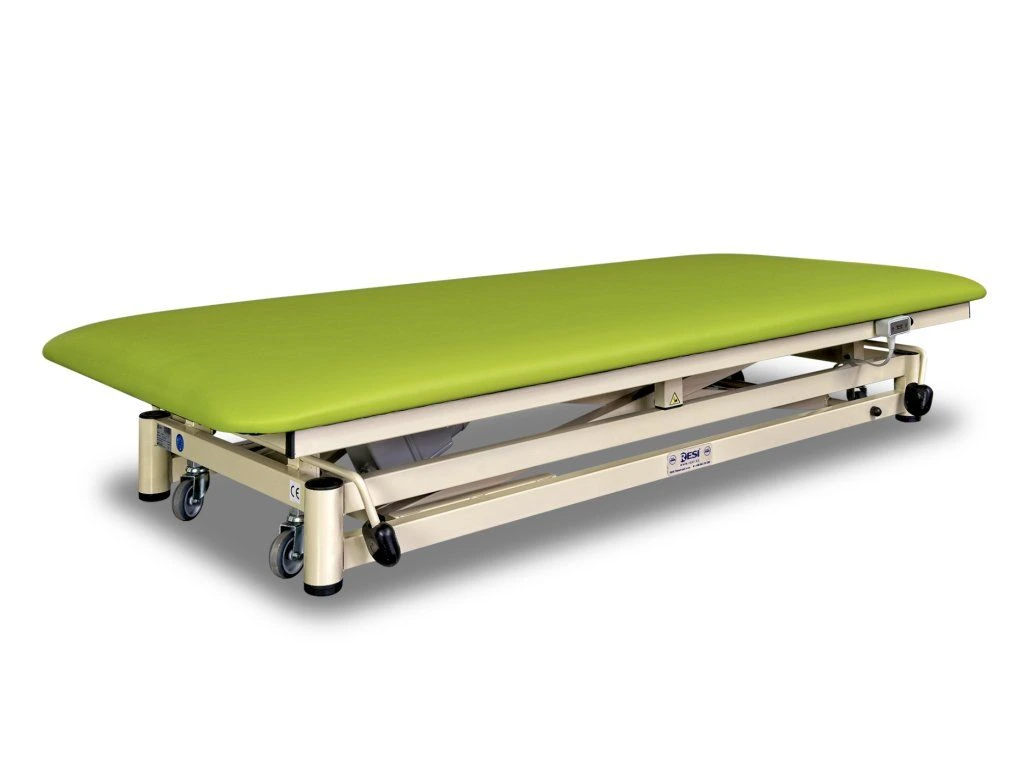
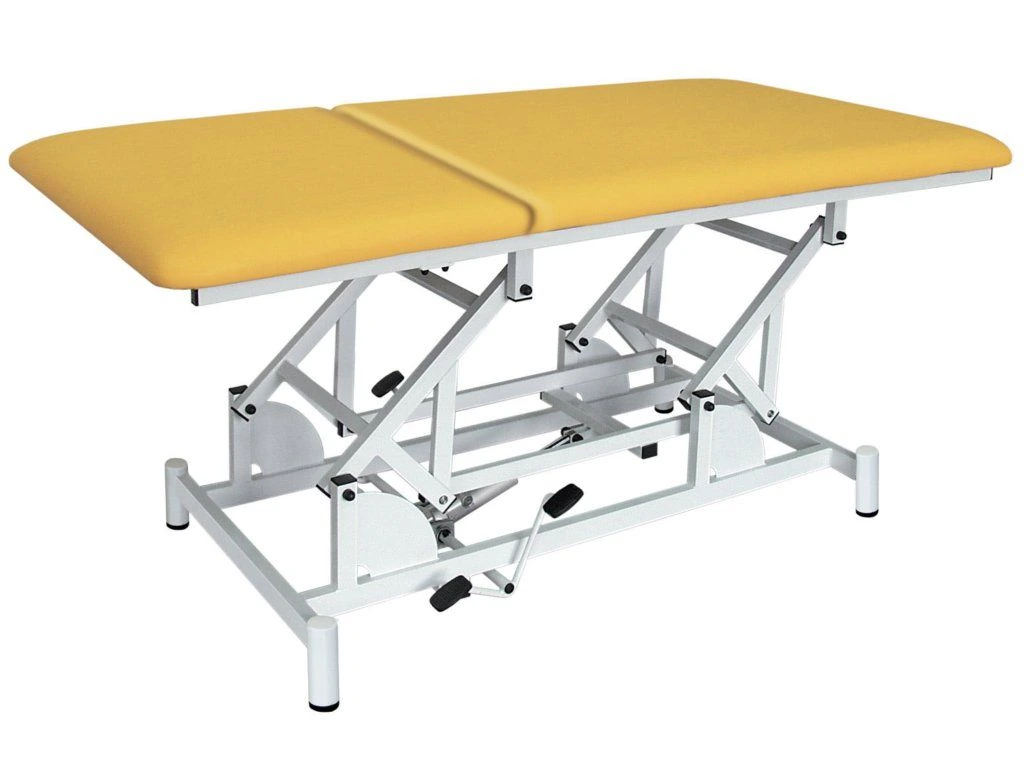
Bobath tables are extra wide (100 cm as standard, up to 120 cm optional) and can be lowered particularly far, the basis for neurological treatment following the Bobath concept.
Models compared
| Model | Drive | Height | Width | Price |
|---|---|---|---|---|
| Riedi Bobath 1h | hydraulic | 51–101 cm | 100–120 cm | from 1,951.60 € |
| Riedi Bobath 1e | electric | 50–105 cm | 100–120 cm | from 2,011.10 € |
| Riedi Bobath 1e LOW | electric | 37–94 cm | 100–120 cm | from 2,011.10 € |
| Riedi Bobath 2h | hydraulic | 51–101 cm | 100–120 cm | from 2,070.60 € |
| Riedi Bobath 2e | electric | 50–105 cm | 100–120 cm | from 2,130.10 € |
| Riedi Bobath 2e LOW | electric | 37–94 cm | 100–120 cm | from 2,130.10 € |
Frequently asked questions
A Bobath table is a particularly wide treatment table with a lying surface that can be lowered very far. The width provides space for repositioning and supporting handling, while the low lowering height makes safe patient transfer easier.
The standard width is 100 cm, and many models are optionally available up to 120 cm wide. The extra width creates additional room to move on the lying surface.
LOW variants can be lowered to a very low height close to the floor, typically starting at around 25 to 30 cm. This makes transfers from a wheelchair or from the floor easier.
Bobath tables are mainly used in neurorehabilitation, where the table's design and dimensions match the practical working requirements of the Bobath concept. The choice of the right table depends on the spatial and organisational conditions of the facility.